Prof. Groth heads the CFD and Propulsion group at UTIAS.
He is a theoretical and computational fluid dynamicist with expertise
in high-performance computing/parallel algorithm design, adaptive mesh
refinement (AMR), and finite-volume schemes for both compressible non-reacting
and reactive flows. He also has expertise in the computation of non-equilibrium,
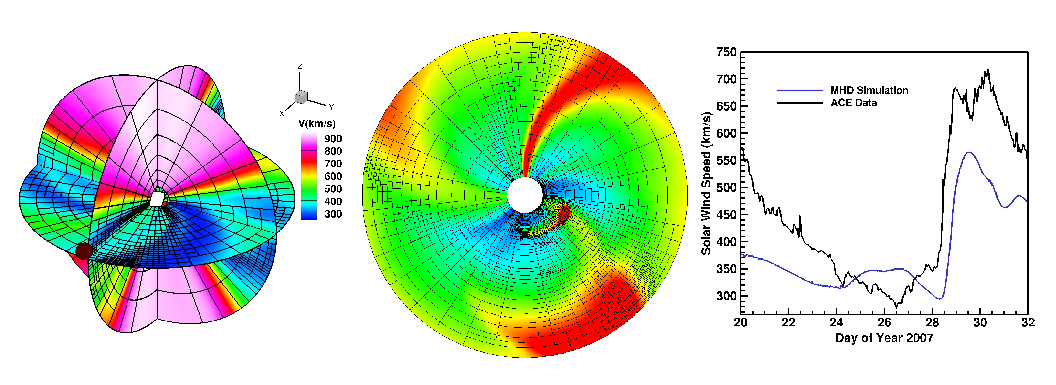
rarefied, and magnetized flows, and the development of generalized transport
models and solution methods following from kinetic theory. His numerical
method research currently focuses on output-based anisotropic AMR for both
steady and unsteady flows, high-order spatial and temporal discretization
methods for flows with shocks, complexity reduction via moment closure methods,
and data assimilation methods for performing data-driven simulations. He is
currently pioneering the development and application of high-order and AMR methods for
high-speed compressible flows of gases and plasmas, as well as reactive flows,
and the formulation of accurate and robust moment closure techniques for
describing a range of micro-physical transport phenomena in non-equilibrium,
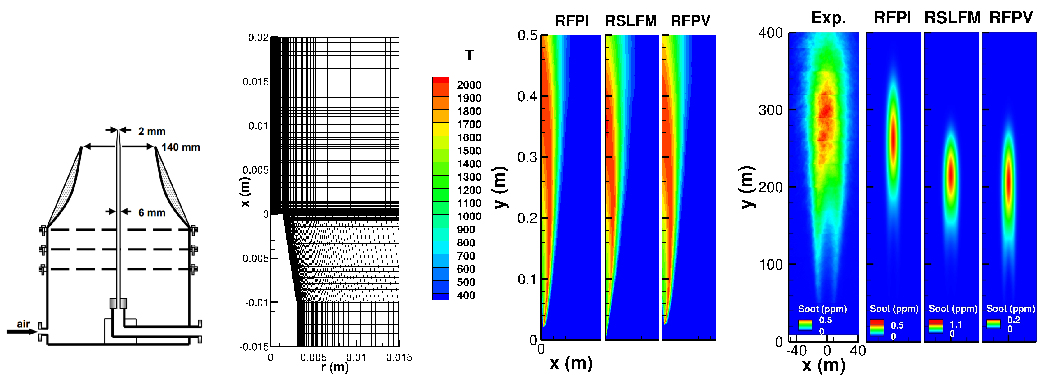
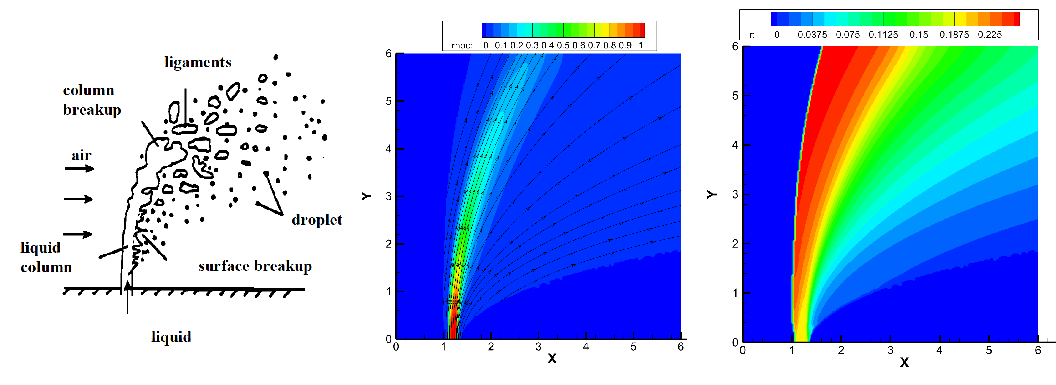
rarefied gases flows, as well as multi-phase flows associated with liquid fuel
atomization and soot formation gas-turbine engines. He is also involved
in fundamental numerical studies of laminar flames and the development of
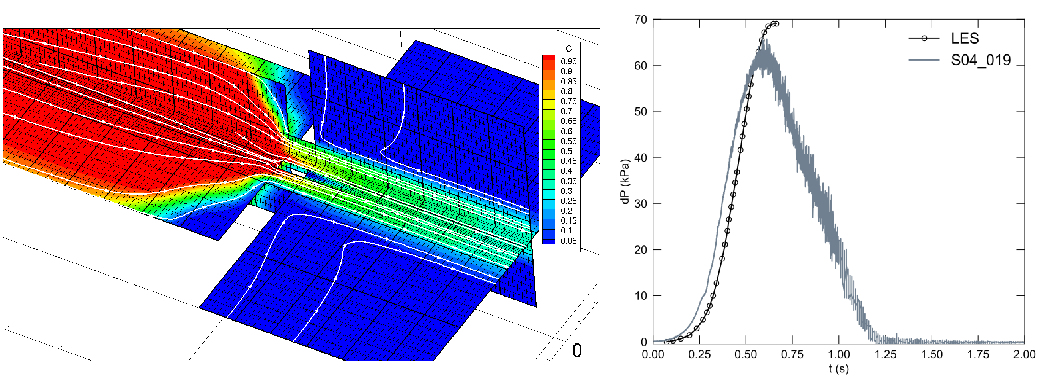
reliable and robust numerical techniques for performing large-eddy simulations
(LES) of turbulent reactive flows. He has extensive experience in the
simulation of gas-turbine combustor flows under high-pressure conditions
through collaborative research efforts with industry partners,
including Pratt & Whitney Canada, a leading manufacturer of aviation gas turbine
engines.
As a
Visiting Professor for the
MPhil Program in Scientific Computing, University of Cambridge, Prof. Groth delivered a lecture series on
from March 31 - April 2, 2026. More information on this course
can be found .
Prof. Groth is one of four co-leads, including Profs. Masa Yano, Mary Pugh, and Aviad Levis, who were involved in
establishing Bridging the Gap: From Computational
Physics, to Physics-informed Machine Learning, to Data-driven Scientific Discovery as part of the
Emerging Data Sciences Program of the University of Toronto
Data Sciences Institute (DSI). Bridging the Gap brings together experts in numerical simulation and
the data sciences to explore the intersection and bridge the gap between the first-principles physics-based modelling of
science/engineering and the data-driven models of machine learning with a goal of achieving significantly improved
predictive capabilities.
More information on this program can be found , including information on upcoming seminars and presentations.
Prof. Bart Ripperda of the Canadian Institute for Theoretical Astrophysics (CITA) and
Prof. Groth were recent recipients of a
2024-2026 XSeed Funding Grant from the University of Toronto to develop a new and powerful
GPU-Accelerated Radiative General
Relativistic Magnetohydrodynamics Toolkit on Cubed-Sphere Meshes for Plasma-Astrophysics
for studying radiation from astrophysical systems. Please see the link
found
here for further details.
Prof. Groth gave an invited lecture on Maximum-Entropy Moment Methods
as part of the von Karman Institute (VKI) Lecture Series on
Advanced Computational Fluid Dynamics Methods for Hypersonic Flows (VKI-STO Lecture Series AVT-358)
co-sponsored by VKI and the NATO Science and Technology Organization (STO)
and held at VKI in Belgium from March 25-29, 2024.